Northern Lights: A new era in Central Asia, Finland’s library fetish, and “don’t fuck with McFaul”


I’m shifting gear slightly with this latest newsletter to focus on a different part of the world: Central Asia. I have an op-ed out in the Washington Post about some interesting changes happening in Uzbekistan as the country’s president is welcomed at the White House today by Donald Trump. (https://www.washingtonpost.com/news/democracy-post/wp/2018/05/15/trump-has-a-chance-to-open-up-one-of-the-worlds-most-repressive-countries/?utm_term=.dd1247410c65)

Uzbekistan is one of the world’s most repressive countries, but Uzbek leader Shavkat Mirziyoyev has embarked on a tentative reform agenda to open up the country since taking power after the death of dictator Islam Karimov in 2016. I know it’s easy for something like to get lost in the noise of everything else happening in the world, but a Central Asian leader at the White House is a big deal. The point that I argue in the piece is that while we should all be skeptical of Mirziyoyev as he tells Western ears what they want to hear, the potential that this opening represents is real and should be pursued.

Good morning/good afternoon/good evening to everyone and greetings from a sunny (and warm!) Helsinki. If you’re new to this newsletter, good to have you and hope that you enjoy it. To everyone else, please send any feedback and hit me up with an email or tweet at me (@ReidStan) with any tips or suggestions. Also, please share this newsletter with anyone you think might be interested. New people can subscribe by clicking this link and entering their email here –> (tinyletter.com/ReidStandish).

WHAT I’M READING

1) This excerpt from Michael McFaul’s new book is a very interesting read. McFaul was Obama’s ambassador to Russia and an architect of the administration’s “reset” in relations with the Kremlin and this covers how quickly his tenure in Moscow was derailed. Come for the insights into the tragically strained U.S.-Russia relationship and stay for the fun anecdote about Obama telling Medvedev to “Stop fucking around with McFaul.”(https://www.washingtonpost.com/news/posteverything/wp/2018/05/11/feature/putin-needed-an-american-enemy-he-picked-me/?utm_term=.b47a47ef2898)

2) Christiana Figueres, who was the head of the U.N. Climate Change Secretariat when the landmark Paris accords were signed, had interesting comments and analysis about the future of Arctic oil. Her argument is that Arctic oil makes no economic sense to explore, partly because it is likely to take years to develop any finds. She argues for more investment into renewables to cut emissions and potentially slow the rapid pace of warming rather than putting more money into oil exploration up north. I’m not sure everyone will agree with her, but they’re interesting remarks. (https://uk.reuters.com/article/uk-oil-arctic/arctic-oil-undrillable-amid-global-warming-u-n-s-ex-climate-chief-idUKKCN1IG0OY)

3) The Guardian has a new piece about Finns’ love of libraries and reading. The piece focuses on the new state-of-the-art library being built in Helsinki and digs into some of the architecture and urban planning behind it. It’s an interesting read and always good to see that people somewhere are still reading books. (https://www.theguardian.com/cities/2018/may/15/why-finlands-cities-are-havens-for-library-lovers-oodi-helsinki?CMP=Share_iOSApp_Other)

STRAY OBSERVATIONS

– Andrii Artemenko, the Ukrainian politician who served as a self-styled diplomat to deliver a peace plan to Trump back in 2017 is being called to testify in front of a grand jury connected to special counsel Robert Mueller’s investigation. Artemenko, for those of you who don’t remember, tried to pass a peace plan for the war in Ukraine (which was slanted heavily in Russia’s favor) to Michael Flynn, who at the time was Trump’s National Security Advisor. A sit down was arranged by Felix Sater (a character with mob connections who worked as an informant for the CIA, FBI and DIA and orbited Trump world) with Trump lawyer Michael Cohen, who was then meant to pass the plan to Flynn. Of course, Flynn was fired and Cohen is in the spotlight for a host of shady behavior. I’m still not sure if the plan was ever passed and Sater, Cohen, and Artemenko have all changed their stories and they conflict with one another. But it’s interesting to see Artemenko get called in.

– I interviewed Artemenko back in 2017 (http://foreignpolicy.com/2017/04/18/trump-ukraine-russia-artemenko-war-peace-plan/) who defended his actions. He took a lot of heat for trying to shop this peace plan. Artemenko was ejected from his political party and Ukraine’s top prosecutor launched an investigation into whether he had committed treason. In May 2017, Ukrainian officials stripped him of his citizenship. But it’s interesting to look back at the ordeal in light of the news that Cohen was soliciting payments from companies to get Trump’s ear. I always wondered if money ever changed hands between Artemenko and the others.

– That incident also came in the foggy period shortly after Trump took office. For Ukraine, those early days were tough. They were hoping for Clinton to win — who was a longtime friend of Ukraine and a Russia-hawk — and were also boosting her chances of winning around Washington, according to a Politico piece (https://www.politico.com/story/2017/01/ukraine-sabotage-trump-backfire-233446). Afterwards the Ukrainians moved quickly to repair ties with Trump’s team and by all accounts have successfully done so. But there was an awkward period in February where lots of Ukrainian politicians were jostling for power and coming to Washington to take advantage of the chaos of Trump and push their own agendas. (http://foreignpolicy.com/2017/02/24/the-road-to-power-in-ukraine-runs-through-donald-trump/)

That’s all for now! I’ll be in touch in the following weeks as some new stuff I’ve been working on comes out.

Best,
Reid
Northern Lights: Russia’s northern neighbors toughen up, the end of history was fake news, and rewriting the Holocaust

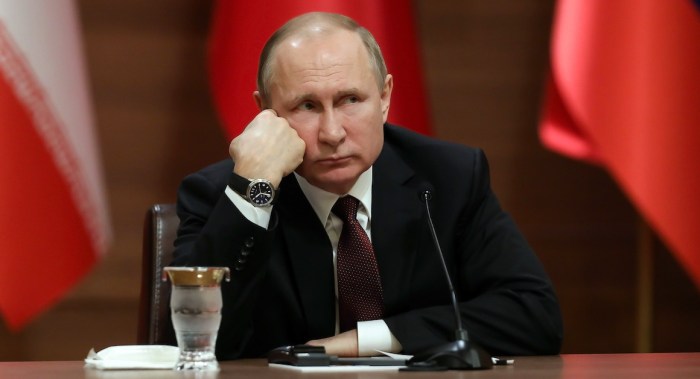
puttttttty

It’s not easy living next to Russia these days. So with relations between the West and Moscow at a post-Cold War low point, Russia’s closest EU neighbors are turning to tougher military and financial measures to send a message to Vladimir Putin.

My latest piece for POLITICO Europe looks at how Russia’s Baltic and Nordic neighbors are dealing with the aftermath of the poisoning of double agent Sergei Skripal in the U.K. and the ensuing diplomatic fallout. The Danish government will hold hearings on passing its own version fo the Magnitsky Act next month and the Swedish opposition has put the law into its platform ahead of elections in September. Meanwhile, Finland is in the process of weighing some legislative changes to better protect against Russian “hybrid warfare.” Last week, Donald Trump hosted the Baltic presidents at the White House and he said that “getting along with Russia is a good thing, not a bad thing,” adding, “now, maybe we will [get along] and maybe we won’t.” Russia’s neighbors are betting on the latter scenario. Read the piece here –> (https://www.politico.eu/article/russia-anxious-northern-neighbors-toughen-up-nordic-baltic-military-defense-us-donald-trump-vladimir-putin/)

Good morning/good afternoon/good evening to everyone and welcome to another newsletter. As always, please send me your feedback. Hit me up with an email or tweet at me (@ReidStan) with any tips or suggestions. Also, please share this newsletter with anyone you think might be interested. New people can subscribe by clicking this link and entering their email here –> (tinyletter.com/ReidStandish).

Also, thanks for the tips last week about Norway. I’m off to Oslo on Thursday, let me know if you have recommended reading, especially about Norway and Russia/the Arctic.

What I’m Reading

1) This piece from Buzzfeed‘s Ben Smith about being a young reporter working in Belarus in the late 1990s and early 2000s is a great read and I highly recommend it. In addition to simply being an engaging first person read, it deals with some weighty themes about learning on the job that seem particularly pertinent today. Plus, Belarusian tractors! (https://www.buzzfeed.com/bensmith/ben-smith-the-mistakes-i-made-as-a-young-reporter?utm_term=.mtr5XRV51#.dojryb5r0)

2) After an Israeli missile raid that killed Iranian military personnel and an alleged chemical attack by the Assad regime, Syria is once again on the top of the White House agenda. It’s seems unlikely at this point that Trump will elect to respond with more than a targeted strike, but things look ready to escalate. The Washington Posthas a good rundown on the latest here. (https://www.washingtonpost.com/world/middle_east/syria-says-strike-on-military-base-carried-out-by-israeli-warplanes/2018/04/09/4179f3a2-2864-46ec-9b35-fef7c4eaf247_story.html?utm_term=.b928951c6fa3)

3) The Trump administration’s new sanctions on Russian oligarchs and top government officials began to bite this week as the rouble suffered its biggest daily fall in more than three years, the main Russian stock index slumped and investors dumped shares in businesses controlled by Oleg Deripaska, a Russian oligarch and Putin-ally who keeps showing up in Mueller’s probe. I’ve been skeptical about how effective sanctions can really be in terms of changing the Kremlin’s behavior, but drops like this can’t really be ignored. (https://www.theguardian.com/business/2018/apr/09/russian-firms-and-rouble-hit-heavily-by-trump-sanctions)

(Tump hosting the Baltic presidents. This was spoofed on the latest SNL during the cold open: (https://www.youtube.com/watch?v=1iCm8tYX-Vw)

My Latest Reporting

1) In case you missed it last week, here is my report from northern Finland looking at the Nordic country’s latest plans for the Arctic. (https://www.politico.eu/article/finlands-race-for-arctic-riches-resources-shipping-lanes-high-north/)

2) On a similar theme, Keith Johnson and I looked at the prospects of the Northern Sea Route, a sea lane connecting Europe to Asia that is opening up faster than expected due to climate change. (http://foreignpolicy.com/2018/03/08/putin-and-xi-are-dreaming-of-a-polar-silk-road-arctic-northern-sea-route-yamal/)

3) This isn’t one of my latest, but it was almost one year ago that I was in Central Asia reporting in Kazakhstan and Kyrgyzstan, so I thought I’d re-up some of my work from that trip.

–> The forever war in Kyrgyzstan’s Fergana Valley (http://foreignpolicy.com/2017/08/07/scenes-from-central-asias-forever-war-isis-al-qaeda-kyrgyzstan/)

–> Looking at extremism and oppression in Kazakhstan (http://foreignpolicy.com/2017/08/01/central-asia-kazakhstan-eurasia-terrorism-extremism-isis-al-qaeda/)

–> The human side of China’s Belt and Road in Central Asia (http://foreignpolicy.com/2017/09/12/silk-road-marriage-china-kazakhstan-trade-economy/)

Stray Observations

– Poland gets most of the attention for its laws aimed at muffling or rewriting history about the Holocaust, but Lithuania is also an active participant. Last week the country’s parliament is preparing to vote on a government-sponsored bill that would ban selling material that “distorts historical facts” that is believed to be targeted specifically at the country’s role in the Holocaust (https://www.timesofisrael.com/lithuanian-bill-would-ban-books-critical-of-the-country/).

– Speaking of Poland and denying the Holocaust, a group of survivors filed a lawsuit late last week against a Polish publisher that put out a series of books glorifying Nazism and denying the Holocaust. (http://www.jpost.com/Diaspora/Polish-survivors-sue-publisher-over-Holocaust-denial-Books-549254)

– The days are getting long, the sun is out, and Helsinki is a swampy 6C degrees. Finnish Spring has arrived!

That’s all for now. Have a good week.

Best,
Reid

Northern Lights: Finland enters the Arctic great game, Russia tests missiles in the Baltic Sea, and Facebook’s downward spiral


There’s an estimated $35 trillion worth of untapped oil and natural gas under the Arctic seabed
, not to mention the economic potential from mining, tourism, and shipping lanes that control the flow of these goods to Europe and Asia. So far, Russia and China have been leading the charge for the High North, but Finland doesn’t want to be left behind in the flurry of activity as Arctic ice melts at an unprecedented rate.

I dug into this in my latest piece for POLITICO Europe (https://www.politico.eu/article/finlands-race-for-arctic-riches-resources-shipping-lanes-high-north/) based off reporting from northern Finland. There’s plans for rail links connecting Norway and Finland to Arctic shipping lanes running from Asia, an undersea tunnel through the Baltic Sea, and designs on building the next generation of icebreakers (or renting out their existing ships) to other countries as they look to project themselves in the High North. It’s part of Helsinki’s ambitions to leverage its location as the European Union’s northernmost point to become the bloc’s gateway to the Arctic and to Asia over the next 30 years.

Good morning/good afternoon/good evening to everyone and welcome to another newsletter. As always, please send me your feedback. Hit me up with an email or tweet at me (@ReidStan) with any tips or suggestions. Also, please share this newsletter with anyone you think might be interested. New people can subscribe by clicking this link and entering their email here –> (tinyletter.com/ReidStandish).

Also, I’m heading to Norway next week for a reporting trip. If anyone has any ideas for places to eat or people to meet, please let me know!

What I’m Reading

1) Russia began testing missiles with live munitions in the Baltic Sea on Wednesday as part of military exercises, which Latvia says have forced it partly to shut down Baltic commercial airspace. Officials say the tests are being carried out in Latvia’s exclusive economic zone, as well as further west in the Baltic Sea. While such actions have become more standard in recent years with tensions between Moscow and the West ramped up, Latvia said Russian drills have never taken place so near its territory and it’s clear that Russia is sending a message to its Baltic neighbors. (https://www.reuters.com/article/us-russia-latvia-missiles/russian-rocket-tests-force-partial-closing-of-baltic-sea-airspace-idUSKCN1HB1O3)

2) The drip continues for Facebook as it catches more heat over its slow response to dealing with fake news spreading on its platform and various groups manipulating the social network for their own ends. Yesterday, Facebook said that that “malicious actors”, such as Cambridge Analytica, took advantage of search tools on its platform, making it possible for them to discover the identities and collect information on most of its 2 billion users worldwide. (https://www.washingtonpost.com/news/the-switch/wp/2018/04/04/facebook-said-the-personal-data-of-most-its-2-billion-users-has-been-collected-and-shared-with-outsiders/?utm_term=.d4ec1259f79c)

3) Cooperation between Beijing and Moscow has been getting tighter in the last few years, but it was interesting that after Chinese Defense Minister Gen. Wei Fenghe met with Russian Defense Minister Sergei Shoigu in Moscow earlier this week, he said very candidly that it was to send a message to Washington. “The Chinese side has come (to Moscow) to show Americans the close ties between the armed forces of China and Russia … we’ve come to support you,” Wei said. So much for subtlety! (https://edition.cnn.com/2018/04/04/asia/china-russia-military-intl/index.html).

Stray Observations

– There was a very interesting article in POLITICO Europe earlier this week by Nima Sanandaji about how Norway has fallen behind its Nordic neighbors (although it also criticizes Finland and Denmark) in terms of women cracking the glass ceiling (https://www.politico.eu/article/norway-invisible-glass-ceiling-women-in-management-positions-gender-equality/). The basic takeaway is that the welfare model is a double-edged sword for women’s advancement and that the Nordic countries that have reformed their systems the most in the last decade have seen the most progress.

– After having written two pieces in the last month (the POLITICO article linked above and this piece for Foreign Policy http://foreignpolicy.com/2018/03/08/putin-and-xi-are-dreaming-of-a-polar-silk-road-arctic-northern-sea-route-yamal/) that both focused on infrastructure and big picture economics and politics in the Arctic, I’d like to focus some more on the personal stories up north. Given all the focus on extracting resources, it seems like ample terrain to focus entirely on indigenous communities in the Arctic and how they’re dealing with the world viewing where they live as one big untapped economic playground. Worth a few more trips, I think.

– Spring feels pretty far off at the moment, so I’ll sign off with the meme that has been going around on Twitter the last few days.


That’s all for now!

Best,
Reid

Northern Lights: An Arctic Suez Canal? life in the high north, and the virality of fake news


The Arctic is warming up faster than anywhere else in the world.
 That’s sounding alarm bells for people worried about the destabilizing effects of climate change, but it’s also piquing the interest of governments eying a shipping shortcut that could shake up the future of global trade. The Northern Sea Route, which runs along Russia’s northern coast, could become a major shipping route connecting Europe and Asia that would be one-third shorter than the Suez Canal.

It’s hardly that straightforward, however. Keith Johnson and I get into the nuances of this in a new piece for Foreign Policy (http://foreignpolicy.com/2018/03/08/putin-and-xi-are-dreaming-of-a-polar-silk-road-arctic-northern-sea-route-yamal/ ) looking at the complications of operating in the far north and how the economics of doing so don’t really add up and wont for several decades (if ever). Still, the Northern Sea Route is home to large energy deposits and Russia has big plans for Arctic oil and gas and is already getting a major LNG project going. The area has also caught Beijing’s attention and was tied into Xi Jinping’s massive Belt and Road foreign policy initiative in late January as a “Polar Silk Road.” So while the Northern Sea Route might not be the next Suez Canal, expect to hear more about it.

Welcome and good morning/good afternoon/good evening to everyone. After a break and some holidays, I’m back at it. It’s been a very busy few weeks for me with some travel to northern Finland that coincided with a nice cold snap. I’ve got a bunch of stories in the works — dealing with everything from Arctic politics to tech start-ups — that should be trickling out over the next few weeks (and I should probably be writing them now), but I thought I’d take a nice break and send out a newsletter instead.

As always, please send me your feedback. Hit me up with an email or tweet at me (@ReidStan) with any tips, suggestions or gushing praise. Also, please share this newsletter with anyone you think might be interested. New people can subscribe by clicking this link and entering their email (https://tinyletter.com/ReidStandish).


Here we are suiting up before taking a dip in the Baltic Sea off the coast of Oulu, Finland (in reality we were floating on our backs with our hands in the air because they were only covered with neoprene gloves.) As you might expect, it was cold, but it was also a very strange feeling to float during the pitch black night in a large hole chainsawed out of the ice. (Photo courtesy of Kseniia Poteeva)

What I’m Reading

1) It’s hard to open a paper/website without reading about fake news/disinformation/bots/information warfare. But some scientists from MIT just published the largest-ever study on how false information spreads and how people interact with it on the internet. There’s plenty to chew on in this, but the general takeaway is that lies spread much faster than the truth and that we’re all very unprepared for how to deal with that. You can read the news write up about the study from The Atlantic here (https://www.theatlantic.com/technology/archive/2018/03/largest-study-ever-fake-news-mit-twitter/555104/or you can read the full paper here (http://science.sciencemag.org/content/359/6380/1146).

2) Speaking of information wars, Shaun Walker has a very good piece for CodaStory about his first hand experiences reporting in eastern Ukraine when the war first began and being swept up in the narratives and disinformation pushed out by the Kremlin. Shaun, along with reporter Roland Oliphant, actually witnessed Russian forces crossing the border into Ukraine, something that Moscow denied and still does despite a wealth of evidence to the contrary. The story is about what happened after they published their article and the first-hand journey through the world of disinformation. It’s a very interesting and relevant read. (https://codastory.com/disinformation-crisis/armed-conflict/when-a-reporter-crossed-the-kremlins-borderline-ukraine )

3) My former colleague Bethany Allen-Ebrahimian has been a roll of late producing some really excellent reporting about Chinese influence campaign in the United States. I’m only linking to one article here, so I recommend following her on Twitter if you don’t already (https://twitter.com/BethanyAllenEbr.) Here’s a link to her most recent piece about Beijing’s efforts to influence life for Chinese students on American campuses. (http://foreignpolicy.com/2018/03/07/chinas-long-arm-reaches-into-american-campuses-chinese-students-scholars-association-university-communist-party/)


(The frozen Baltic Sea with the moonlight in the Bay of Bothnia. Photo courtesy of Kseniia Poteeva)

Stray Observations

– A new study came out earlier this week in Finland and it found that only 17 percent of people were in favor of joining NATO, which is a new dip in terms of support. But it also found that about half of the country is in favor of working with Western militaries, like the United States, to prepare against a Russian military threat. So, as always, a complicated security picture, but also don’t hold your breath if you expect Finland to join NATO anytime soon.

– The Swedish Prime Minister visited Washington and met with Donald Tump this week and by most accounts, it was a successful visit. Other Nordic leaders, including Finnish President Niinisto, have already made the trip and generally received the commitments they wanted from Washington. It’s interesting to watch this shift to more bilateral relations under Trump.

– Campfire salmon!

That’s all for now! Enjoy the weekend!

Best,
Reid

Subscribe here!

Northern Lights: Finland’s new (old) president, welcome to the hybrid world, and #FinnFamous

The result that everyone expected came on Sunday night and Finnish President Sauli Niinisto decisively won re-election with 62.7 percent of the vote. It was a largely uneventful re-election that was supposed to be centered around foreign policy, but instead largely consisted of candidates hitting domestic issues in preparation for parliamentary elections in 2019 because they knew that Niinisto was going to win.

You can read my piece from election night here for POLITICO Europe (https://www.politico.eu/article/niinisto-declares-victory-in-finnish-presidential-vote/). After his victory was declared, I asked Niinisto if he planned to use his huge mandate to take some bold action and shape Finnish foreign policy in his next term. His answer was that “Finnish people have been accepting of what I have done so far and I have no intention to make changes just to make changes.” So that is a resounding “no.” Given his re-election (and answers like that) it’s safe to say that Finnish NATO membership — the country’s perennial security question — is highly unlikely. Pending a big change like Sweden moving to join, it’s hard to imagine movement on NATO in Finland until the next generation of leaders come to power.

Welcome to newsletter number 2. Good morning/Good afternoon/Good evening depending on where you are in the world right now. Welcome to all the new people that have subscribed since I sent out the first newsletter last week. Normally I won’t be sending these out so frequently (the goal is once a week/ twice a month) but figured I’d send out a special one for the election.

Eager to hear from you all, so please don’t be shy with suggestions or feedback. Email me or get in touch via Twitter (@ReidStan). As always, please share this with anyone you think might be interested. And if someone has added you to this without your knowledge, welcome and enjoy the ride!

My latest reporting

In case you’ve missed anything I’ve done recently, here’s what I’ve been up to over the last month or so.

1) I went out on the campaign trail and interviewed Laura Huhtasaari, Finland’s leading right-wing populist. You can read my profile here: (https://www.politico.eu/article/laura-huhtasaari-president-election-finland-marine-le-pen/)

2) I looked at a new center that opened up in Helsinki designed to fight back against “hybrid warfare” and how it is struggling to meet the expectations that have been set out for it.  (http://foreignpolicy.com/2018/01/18/inside-a-european-center-to-combat-russias-hybrid-warfare/)

3) With America’s midterm elections approaching, I looked at how many of the same vulnerabilities that allowed Russia to meddle in the 2016 election are still there and little is being done to fix them: (https://www.theatlantic.com/international/archive/2017/12/russia-disinformation-election-trump-putin-hack-cyber-europe/549260/)

What I’m reading

1) Some fun reading to start the week off right. This piece from the Wall Street Journal looks back at a forgotten chapter of history from a century ago when a contingent of U.S. troops found themselves fighting Bolsheviks during the communist revolution. (https://www.wsj.com/articles/when-u-s-troops-battled-bolsheviks-1516980334

2) From being a platform for foreign powers to meddle in other countries’ elections to bending news publishers over the barrel, Facebook has gotten a lot of (deserved) flak lately. But this piece does a good job of laying it on the table in an easy to read way. Check it out: (https://www.theatlantic.com/technology/archive/2018/01/facebook-doesnt-care/551684/)

3) This one is more of a dense read, but still worth your time. It’s written by Dmitri Trenin and it tries to pinpoint just what kind of changes the world order is going through right now. Trenin is worth reading because he often reflects the thinking of foreign policy power-circles in Moscow but is usually balanced and insightful. According to Trenin, we’re not gearing up for a Cold War 2.0, but rather a Hybrid War, which is maybe more dangerous. (http://carnegie.ru/2018/01/25/avoiding-u.s.-russia-military-escalation-during-hybrid-war-pub-75277)

Stray observations

– I got a lot of positive feedback from people for the story I did on Laura Huhtasaari, but especially from people who liked that every expert quoted in the story was a woman. As a journalist I reach out to the people that are most qualified, but you’d be surprised at how often female experts say no to interviews because they don’t feel they are authoritative enough to comment. Male experts have no problem giving you their take, even if they are less-qualified than their female counterparts.

– Finland gets lots of praise for its education system (and rightly so), but watching this election cycle made one thing clear that the Finnish system is lacking: public speaking skills. In debates and interviews many candidates looked like they’ve never spoken in public before and stammered with awkward body language in what seemed like unrehearsed speeches. I think this is partly generational, but it really struck me how watching candidates running to be a country’s head of state seemed awfully similar to bad first year university power-point presentations.

– I was a big hit with Finnish media who were eager to ask for my take as a foreigner covering the election. I did a segment with YLE radio, the state broadcaster, and also an interview. It’s in Finnish, but you can see it here. #FinnFamous (https://www.is.fi/presidentinvaalit2018/art-2000005543369.html)

– Here’s what you’re missing in Helsinki.

That’s all for now. Have a good week!

Best,
Reid

Subscribe here!